

It is obvious by now that no person in power anywhere on Earth has any interest in reducing fossil energy demand.
Therefore it’s up to us. Over 70% of Americans report ourselves as concerned about the climate. If we all together did something which noticeably reduced fossil fuel demand, nobody in the world could ignore that. And we could. Those of us who drive could drive slower, every day, every trip. Never go above the speed limit even during emergencies. For extreme emergencies allow yourself to go the whole speed limit. For me this happens fewer than one time per year. The rest of the time, always drive at least 5 mph below the speed limit up to an absolute maximum of 55, and no faster.
Besides everything else, it’s way cheaper.
And indescribably more pleasant. The idea of hurrying, the burden of getting there as fast as you can, evaporates, leaving a sense like having enjoyed a deep sigh. You relax. You know how long it takes to get there, and you budgeted an extra 15 minutes, then left a couple minutes before that just so you didn’t have to feel rushed.
It makes driving vastly easier.
If 70 out of every 100 cars were going fifty-five mph or less, no more than the posted speed limit minus 5 mph, most of the time on most of the roads the other 30 would be too. You can’t go any faster than the guy in front of you.
The only way to reduce fossil fuel burning in the world is to reduce fossil energy powered activities in the world. I understand that Americans have been told different, but the record proves my statement. We’re doing all the other things worldwide and we’re not reducing fossil fuel burning.
We’re increasing it.
Understand that as a rule of thumb, most activities are roughly 100% fossil fuel powered. Reducing any activity will work. The more energy a given activity requires, the more opportunity it offers for saving fuel.
Simplified version: The way to reduce fossil fuel burning is to do less, and do it slower.
In the United States of America, the single activity which consumes the most energy, the most fossil fuels, is driving. High speed transportation. It’s simple physics that speed is energy. Over a quarter of all the energy we use as Americans goes to driving. No other part of our lives is even in competition. Therefore, the easiest way for an American to reduce fossil fuel consumption is to lower transportation speed. Drive slower.
You have to do it on your own. The government isn’t going to make you do it. The government would prefer you not do it. The government doesn’t want to talk about it. If 70% of average drivers slowed down, national GDP would shrink. Governments don’t want that.
It’s on us. If you want to slow down, you can. So far it’s legal.
If every licensed driver in America who self-identifies as concerned or very concerned about the climate were to drop their average speed by 8%, US transportation fuel consumption would immediately drop by over 10%. Every single gallon of gasoline or diesel fuel turns to over 22 pounds of CO2 in the process of being burned for energy.
The largest fuel savings are available at the highest speeds. In order to add speed to a car, you have to multiply the energy you put in. In other words, the slope of adding energy is much steeper than the slope of adding speed. More speed = more x more energy. Many licensed drivers in the US could get close to an 8% reduction by the simple act of strictly obeying posted speed limits.
How many people went out and bought different light bulbs for their homes to reduce their carbon footprint?
Our high speed transportation system consumes well over twice the fossil fuels that our homes consume, and that’s counting all our home energy. Not just light bulbs.
Save energy by turning down your thermostat in winter?
You could save more by slowing down 5 mph all the time always.
Save energy by buying a heat pump?
You could save more by slowing down.
Save energy by buying an electric cooker?
You could save more by slowing down.
Anything you buy costs you money. Slowing down saves you money. Slowing down could save more energy, reduce more emissions, than anything you could buy.
If you turned off all the lights, turned off the furnace and air conditioner, blew up your TV and threw away your computer, if everyone did those things, they wouldn’t save anywhere near as much energy as a nationwide 35 mph speed limit would save. And you could drive 35 while still living warm and toasty and keep all your toys and trinkets.
Ignore for the moment all the climate deniers. Ignore the Tmurp administration and the Drill Baby Drill. We outnumber them by two to one. If we all slowed down they couldn’t find any way to burn all the fuel we saved.
By definition, leaders lead, and where they lead, societies go. If any person in power anywhere on Earth had a leadership level interest in reducing fossil energy demand, given the absolute connection between energy and action, that person’s society would already be using less fossil energy than yesterday, less than last week, perhaps even less than last year. It wouldn’t be hard.
Many people who are not in a leadership position or a position of power are, and have been now for some years, demanding that their societies burn less fossil fuels, but they are doing it within the realm of speech. We specifically talk about fossil fuels. This is not working, and never will work. The issue isn’t the fuels. The issue is the actions. Burning fuels is the result of beginning some action. The burning stops when the action is completed. The action is cause. No matter what we decide to do, if we don’t do it outside on foot, the odds are that we are about to burn specific amounts of specific fossil fuels in order to power our action.
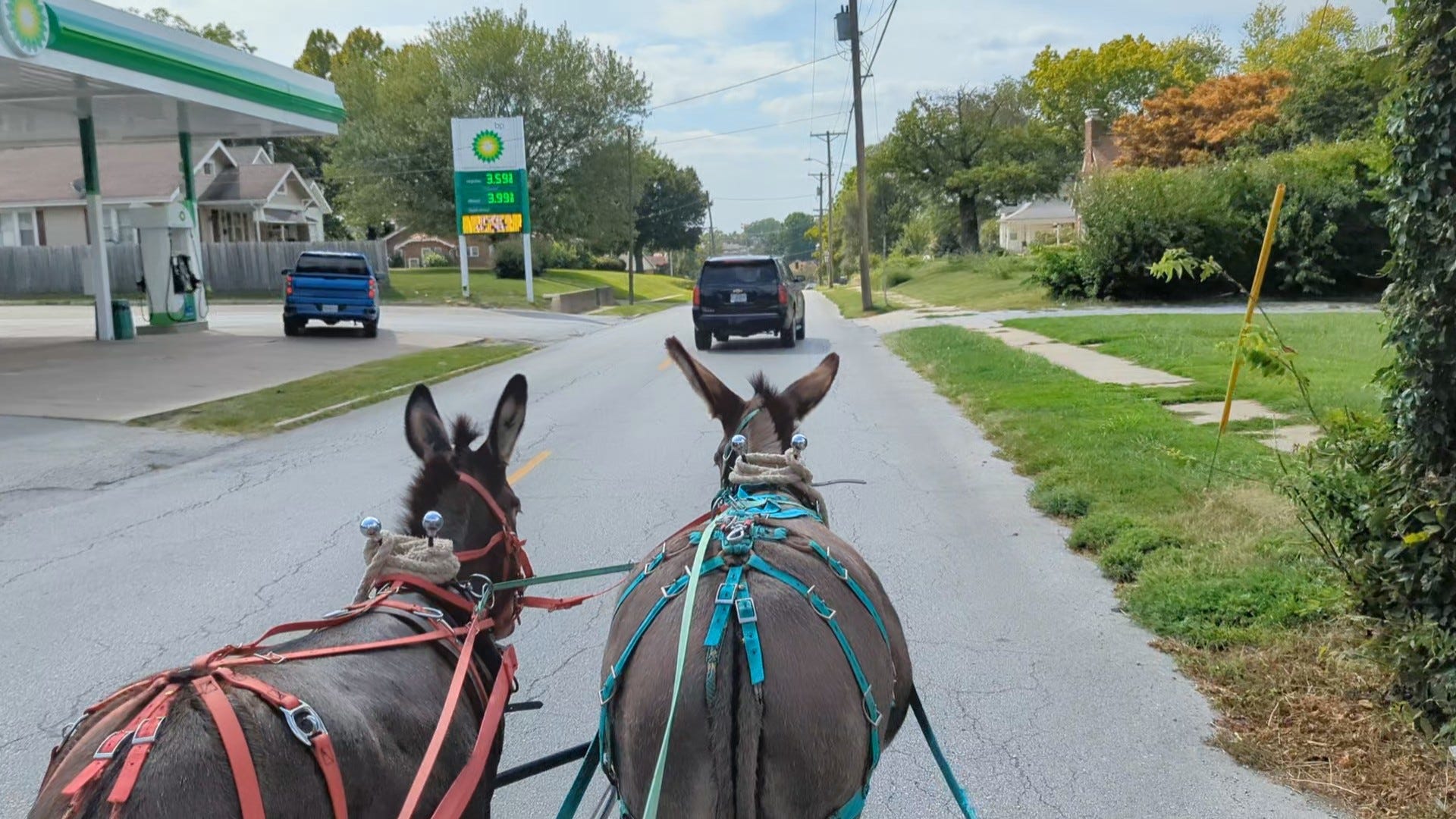
For me to sit here and write this essay increases demand for fossil fuels compared to me being outside walking on my land. Immediately before I came in and began this action, this interval of writing, I was outside with a big donkey jenny, leading her, talking to her, instructing her. That particular action did not require any fossil fuels at all. When I came into the house and turned on my laptop, I immediately demanded that a small amount of fossil fuel be burned on my behalf.
But if I went out and got into my Subaru and drove it into Richmond, even at my slow pace, I would be demanding significantly more fossil fuel than this laptop ever does. Well over a quarter of all the energy we Americans use in a year in the United States goes to accelerate cars to, and maintain cars at, speeds. Well over a quarter of all the energy used worldwide is to accelerate cars, trucks, boats, and aircraft to speed and maintain them there. The faster the individual car, truck, boat, airplane goes, the exponentially more fuel that has to be burned. Even electric cars. If it’s a Tesla, part of its fuel is coal, part is methane, another fair-sized hunk of it is nuclear fission heat, and somewhere around a tenth of it comes from so-called renewables. Either way they roll, the faster they roll the more energy, specifically the more fossil fuel, exponentially, they demand.
It absolutely does not matter what you drive. You can use less energy, less fossil energy, tomorrow by driving it slower.
If 70% of us drove slower we could use a lot less energy.
And you’d be able to see it. You could see it in the charts. You could see it out the window. You could see it in reduced death rates. You could see it in reduced tire sales. You could see it in reduced brake jobs. Energy, speed, wears things out. Energy breaks things up and breaks things down.
Better than all of that, if a majority of the licensed drivers in all developed countries slowed down, as a direct result of that, the global economy would contract. The popular word is “degrowth,” which technically doesn’t mean anything, but it’s still a useful concept.
Every economic action taken in the developed world requires that fossil fuel be burned to cause it to happen. The only possible way to slow atmospheric carbon increases is to slow economic activities. Surface speed is central to economic actions. Surface speed requires fossil fuels, as we have established, in a relationship where speed increases arithmetically and energy required to cause speed increases exponentially. Even a little slower is a lot better.
On top of that, industrial production and consumption rates are absolutely limited by the speeds available to move raw materials and finished products. If all the trucks go a little bit slower, there will inevitably, as a direct result, be a little less stuff on all the shelves.
The only way to save Earth, and perhaps even keep it habitable for Homo Sap, is to break the current economic machine.
It’s a finely oiled, precise, high speed machine.
Put sand in the gears. Slow down.