
Gainful Farming
no to be confused with profitable

A new Substack by Eric Suquet and its title post, both named Fuck Farming, got considerable interest. Eric said that, after 10 years, he’s considering quitting sustainable livestock farming because, basically, he can’t make a living at it.
Almost nobody can. Small farms are something, but that thing is not a business plan in 21st Century industrial societies. People aren’t going to pay much for food when industrial systems can produce untold tons of barely edible yummy stuff to support widespread obesity and sell it dirt cheap. On top of that, everybody has to subscribe to fifty writers on Substack, subscribe to streaming this and Photoshop that, subscribe to MS Word, Excel, and the rest of that, pay for their cloud storage, buy a new phone every couple of years, pay for that service, pay for internet service, support a car or two, insurance, taxes, health insurance, a TV bigger than any wall in my house, pay dues to the homeowner’s association so they can tell you what you can plant in your yard, tell you what you can park and where you can park it - who’s got money for decent food? Nobody.
The dirty secret is that of course nobody can make money on a small farm. Few can make money on a big farm, and most of that comes from various government subsidies that are only available to the rich. The average farm in the United States runs 6 years from founding to bankruptcy. At ten years, Eric has already beaten the odds.
Money is a scam. Every time you run what you own or make through a money transaction it gets smaller. A few people make money on money, and most of everybody else loses. Including me.
So I avoid money transactions. I’ve been farming now for 41 years, and I can just about count on the fingers of one hand all the times I’ve ever gotten paid for anything I produced on my farm.
I’ve eaten a lot of it, though.
Attempting to operate a small farm at a money profit, or a money livelihood, forces short term thinking. You’ve got to plant something that you can sell this year, or raise an animal you can sell this year. You’ve got to be able to work as much land as you can, as fast as you can, to have enough yield to keep the lights on and the tractor running.
The other option is to find ways to get such money as you need from off the farm. When I started out on my small farm I was working fifty miles away from home, in Kansas City where everybody else in my county worked, commuting an hour and a quarter every morning, another hour and a quarter every night. I moved to my farm in January and didn’t see the sun shine on it on a weekday until late March. Left in the dark, worked all day, came home in the dark. Fed chickens in the dark, gathered eggs, worked all day Saturday and all day Sunday to build something worth having.
If I was going to do it again I think I’d sell the car, or at least park it except in case of emergency, get a job in the local town at McDonald’s or Sonic or behind the counter at an auto parts store, and commute by bicycle. By the time you commute a hundred miles a day the car eats up all the additional earnings anyway.
I started out building something that would provide for me if - when - the machine collapsed. I moved to my 40 acre farm in 1985. I’d already seen the Arab Oil Embargo, the Iran Oil Embargo, Ronald Reagan’s decision to run the US on borrowed money so rich people wouldn’t have to pay taxes. Everybody thinks the machine is going to go down now because a couple dimwits decided to drop a bunch of bombs on Iran, and it well might, but I’ve been planning for it to go down in my lifetime for over forty years. I’ve spent the whole time trying to build a life that doesn’t rely on it so heavily.
We’re only planting about 150 trees from the Missouri Department of Conservation this year, and most of those not food bearing. We’ve got a foundation in oak and hazelnut that’s mostly not bearing yet but should start soon. We’ve got a few chestnuts that should bear soon. We’ve got elderberries bearing, persimmons bearing, and one big burr oak in the back yard that produces generously. We’ve got corn planted, squash ready to go under it, pole beans to climb it - the three sisters. We’ve got a team of donkeys that are smarter than the average American voter, and far more willing to work. We’ve got a pretty good wagon I built, we’ve got a work cart that enables the donkeys to pull the manure spreader.
For the past two years I’ve been buying hay, to the tune of almost $1800.00 a year, but this year we’ve got a horsedrawn hay mower. Syd my helper has two solid broke draft horses that can pull the mower. We’ve got a little diesel tractor that will pull our square baler, but if the diesel goes away we know how to haul the hay in loose and store it. That’s how I used to do it.
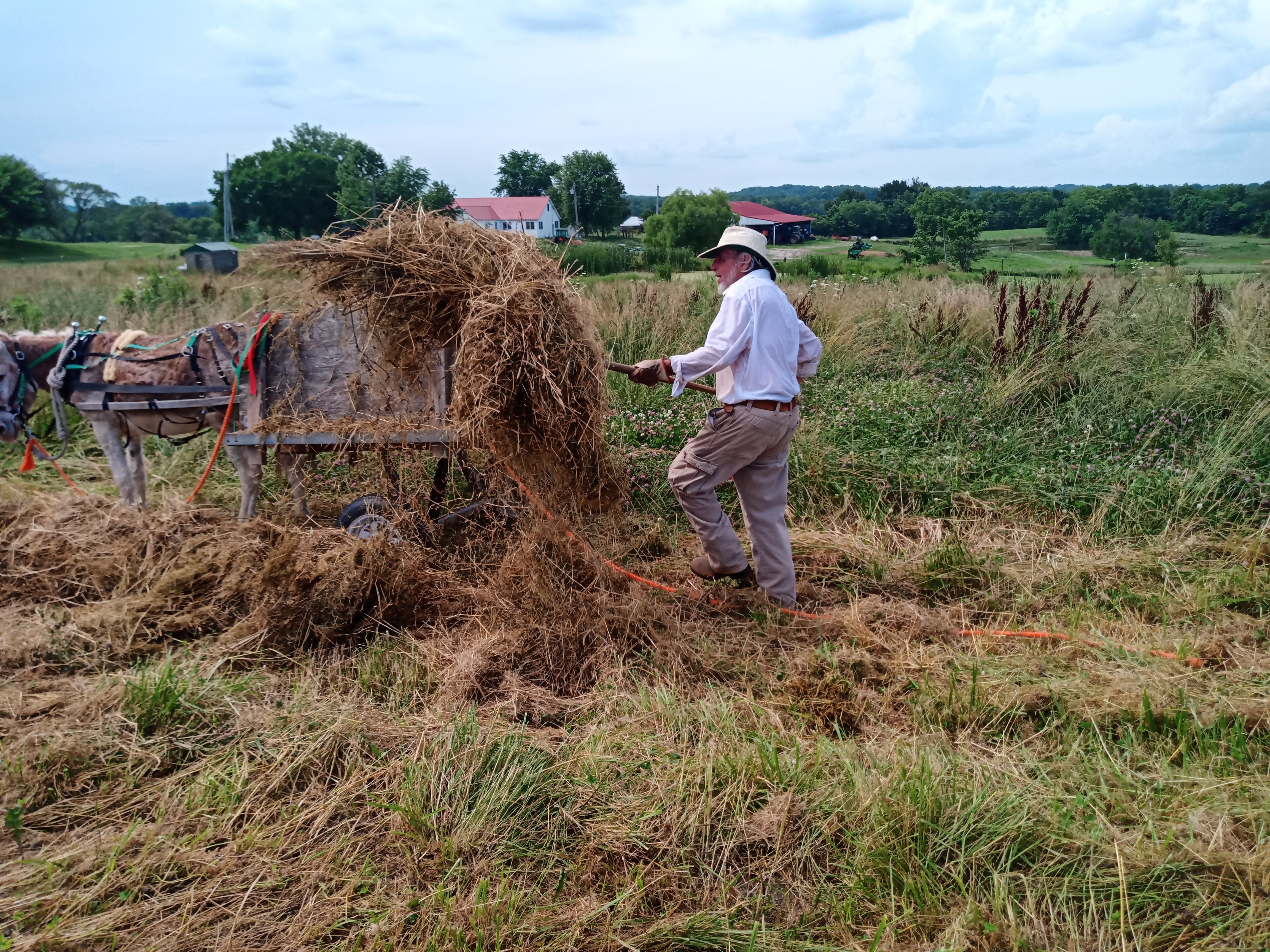
Animals had been eating stored hay for five or six thousand years before anybody thought up baling it.
While the diesel flows we’re digging water management structures to catch modern high energy extreme rains and distribute them across the fields instead of letting it all run down into the creek and away. We’re planting willows along the creek to attract beavers, which we know already live within less than a mile from here by water. If the beavers come we’ll have beaver ponds to catch fish out of.
While we wait for the beavers, we build imitation beaver dams ourselves, wood piles in the creek to slow the water and let our neighbors’ topsoil settle out to reverse the erosion which was happening.
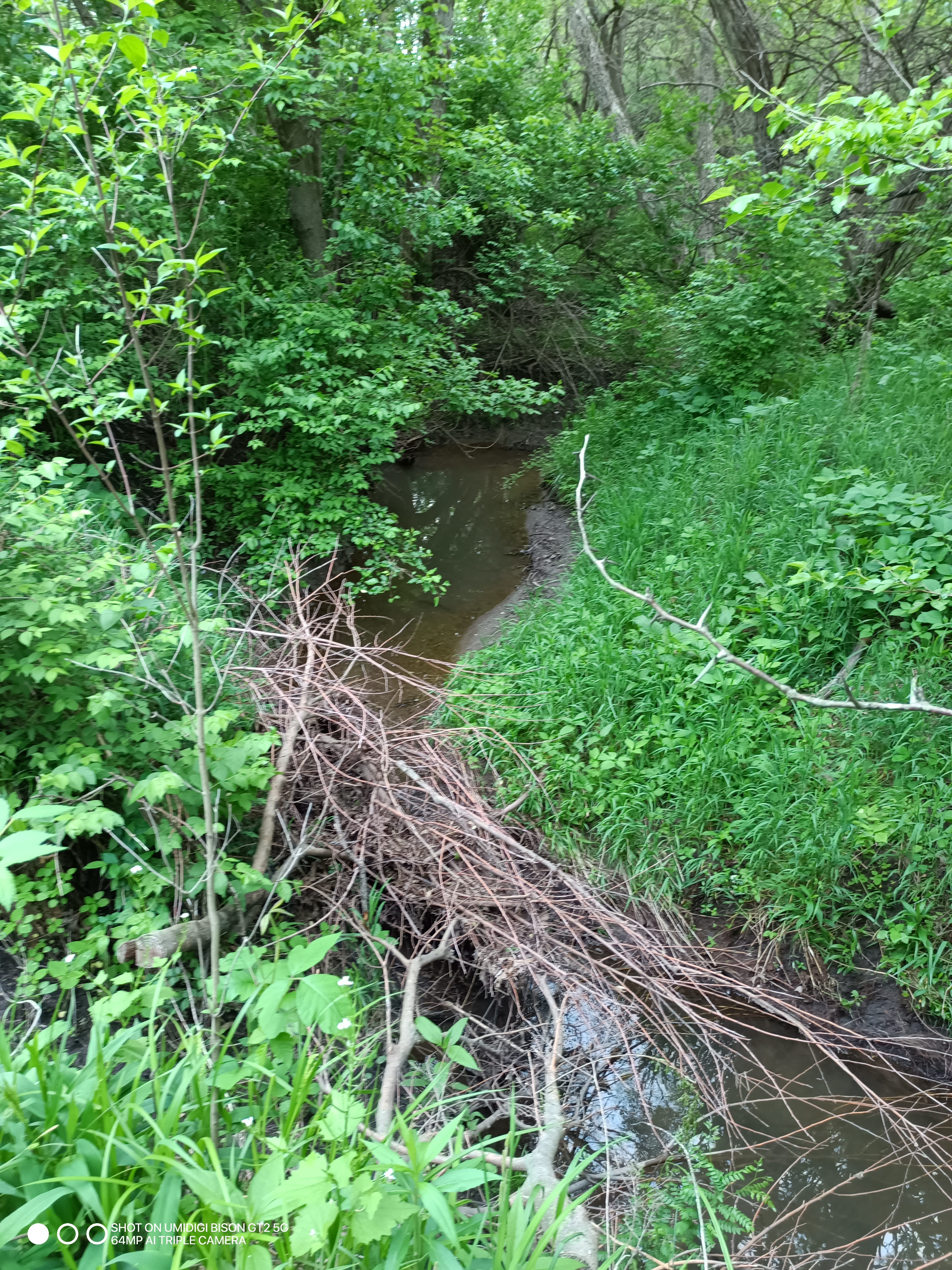
We get the sticks from pruning, from removing trees which are in our way, and picking up deadfall out of our fields. Most of the prunings and removed trees get run through the donkey yard before they go into the creek, because donkeys love leaves and bark, and also eat twigs.
The deer have been eating on the chestnut trees, which is ok. If times get hard we’ll eat on the deer.
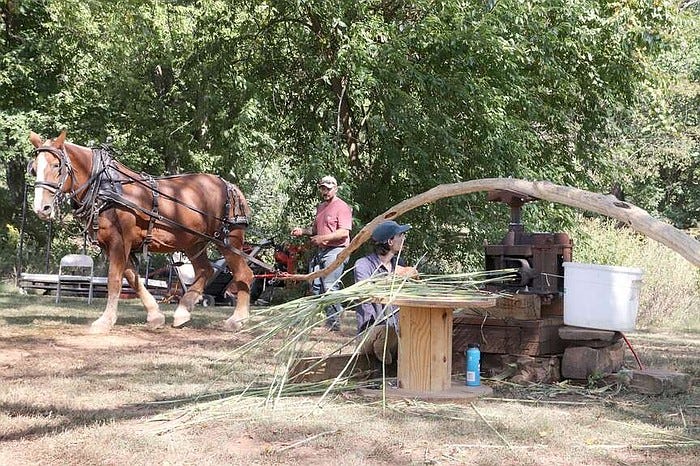
Besides our perennials, and our kitchen gardens, this year we’ll be planting sweet sorghum to make syrup. We’ve got a horsedrawn sorghum press. Although we don’t focus on making a profit here, we will be taking donations from visitors to see the sorghum worked.
We’ll also plant a small field of sunflowers. We have a no-till planter which enables us to plant annual crops directly through close-mowed turf in grass meadow. This year we’ll be pulling the planter behind a little John Deere tractor, but we chose a planter which our donkeys will be able to pull after we finish our work cart / forecart. We plan to put a donation station down by the sunflower field so people who want pictures will have an opportunity to contribute to it. I spend a ton of money every year on black oil sunflower seeds for my bird feeders. I can save on that.
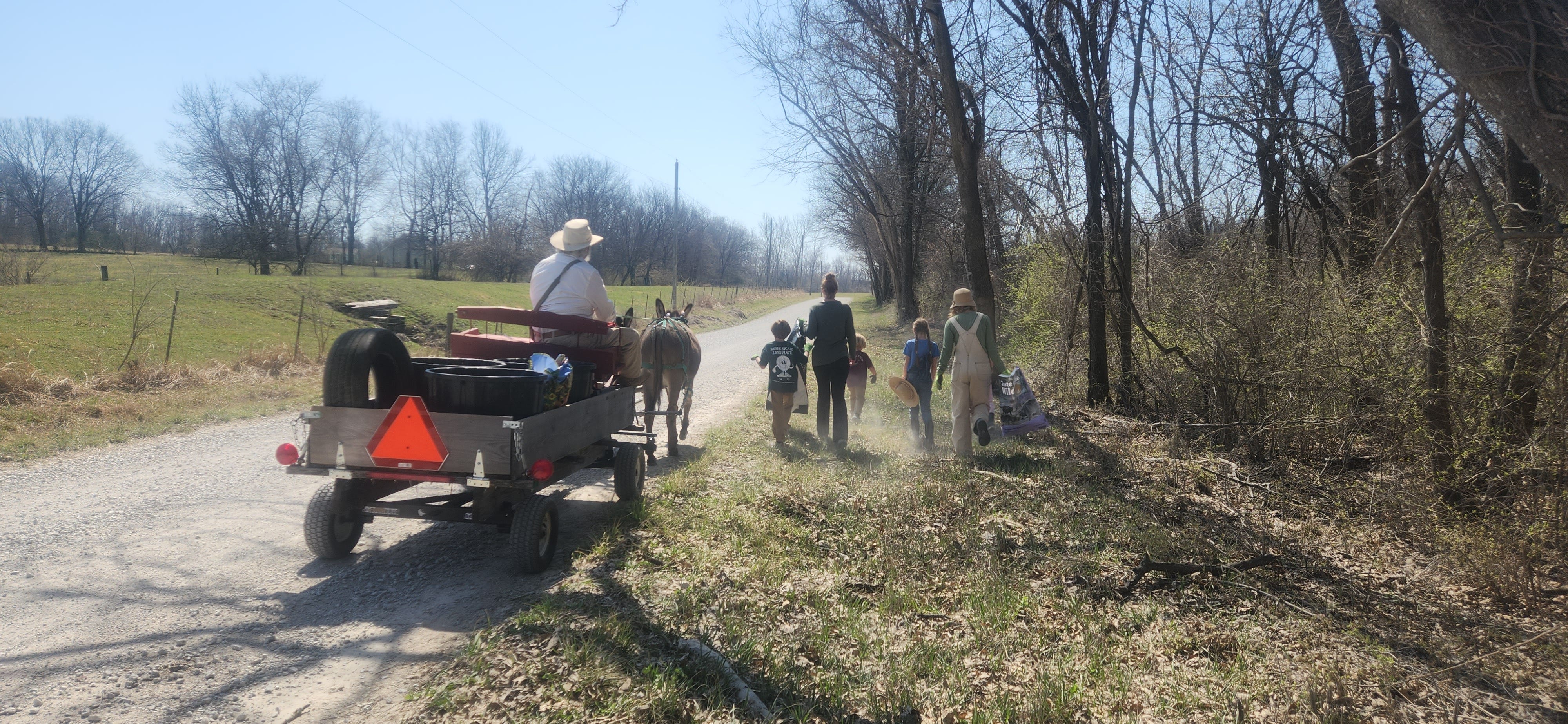
We made a few bucks this year on a donkey drawn road clean-up, put the word out to the homeschool community that we’d be running our donkey wagon to clean up the trash off the local roadside and offered an opportunity for them to bring their kids for a small fee.
A little later this summer we’re planning to have a fort building day, where kids can come cut Amur honeysuckle, an invasive shrub, in the woods and build forts out of it. We’ll probably do a lot of the cutting - we’ve had practice. We’ll make a few bucks. We hauled scrap iron out of the fields and outbuildings to get the money for the sorghum press. Sometimes we have to do money, but it’s not our focus.
I do pay my help. I have two young women who work here. One I pay a full living wage to, the other is part time and also earns money trimming horse hooves. I’m fortunate enough to have some accumulated money from my life fixing this and that, I’m a disabled veteran and get income there, and I worked a long paid life and get social security. We work as a community, but young people can’t live without income in this world and I need their help. When the whole machine goes down and the money disappears, the objective is for all of us to be able to survive on what we’ve built.
I’m an old man, and childless. My wife is a childless old woman. If the machine stays up longer than I do, the help will get the farm. I already gave my other one to one of them.
And I never have to spend money on entertainment. My life is more fun than you can buy in a city.
This is great. Intentional community building. I bet this guy sleeps well.
We have started a co-op of sorts out of an 1950s building on 4 acres in the rural midwest. We are decades behind the author but have similar goals but with less husbandry.
Finding kindred spirits in this world really does help with the loneliness of anticipating collapse in an otherwise utterly distracted world. Keep on farming and keep on writing Jeff.